

Back to case studies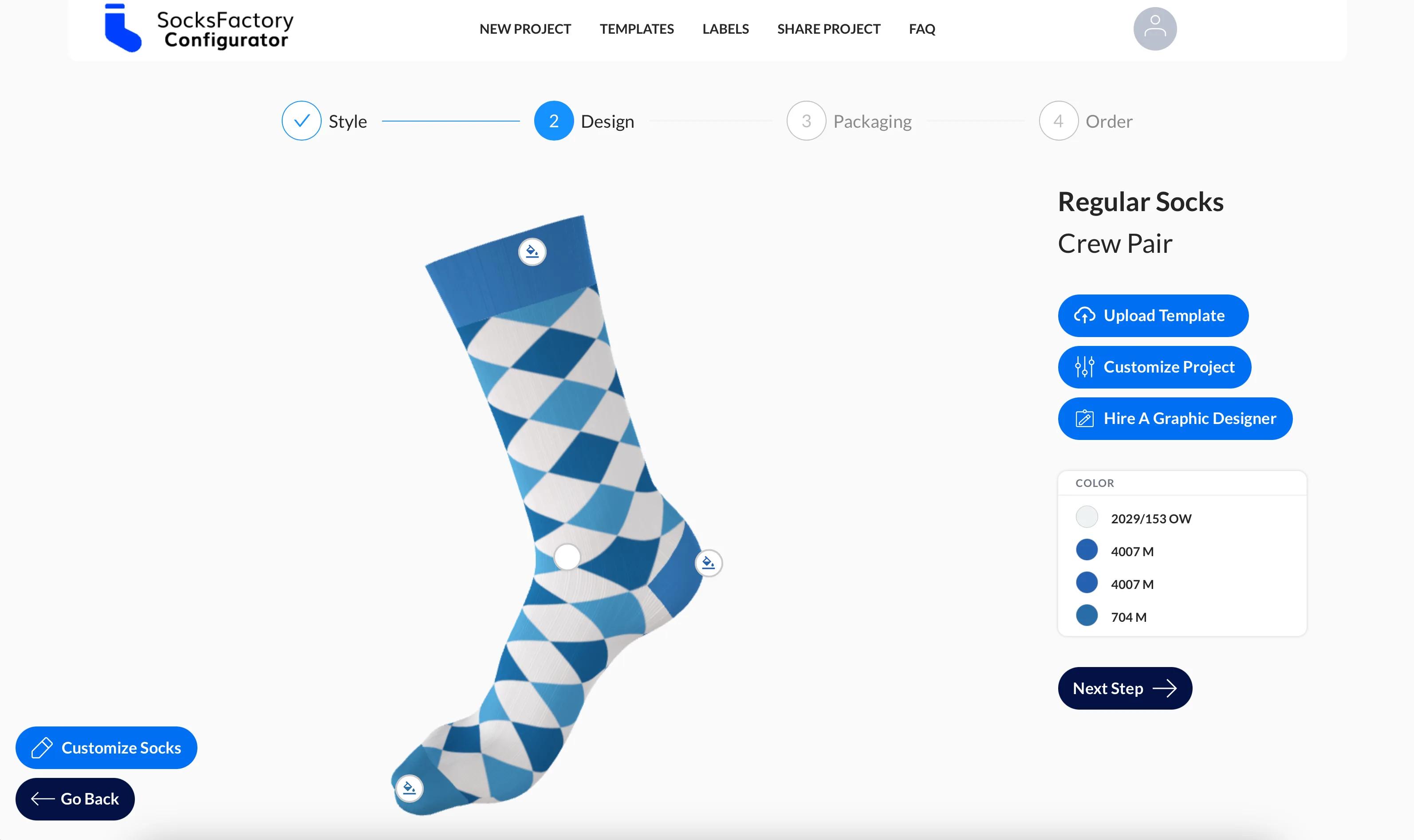
Apparelapparelsocksenterpriseecommerce
SocksFactory: designing your own socks in 3D, in three languages
SocksFactory·
SocksFactory is a Polish factory that has operated in the knitting industry since 1998, manufacturing for international brands and producing socks for wholesale, events and marketing campaigns.
For their new websites they needed a 3D sock configurator — one that worked across three markets and let customers bring their own designs.
Customers needed to select the type and size of the sock and choose colours from an available fabric catalogue.
Shoppers had to be able to upload their own sock designs using a template, and share the project through a unique URL.
The configurator needed multi-language support, since it would be used in three different countries.
Phase two required a login module with Gmail and Facebook sign-in so users could save projects and see an order history.
Phase two also called for a 2D template editing tool so users could design socks directly inside the configurator.
A shopping cart system, plus packaging and label options, and the ability to switch between left and right sock.
The client selected the Enterprise plan. The custom front end was built quickly with the 3D viewport and its presets already in place in-house. Project sharing through unique URL links was implemented using Firebase, and customer artwork was applied to the sock by UV mapping onto the 3D model. Submitting a sock project triggers emails through the Twilio API.
In phase two, a JavaScript canvas 2D library was added so users could edit a sock template or a label directly inside the 3D configurator — uploading images, cropping, dragging, rotating, and adding text and basic shapes. The configurator was integrated with Stripe and PayPal to finalise orders.
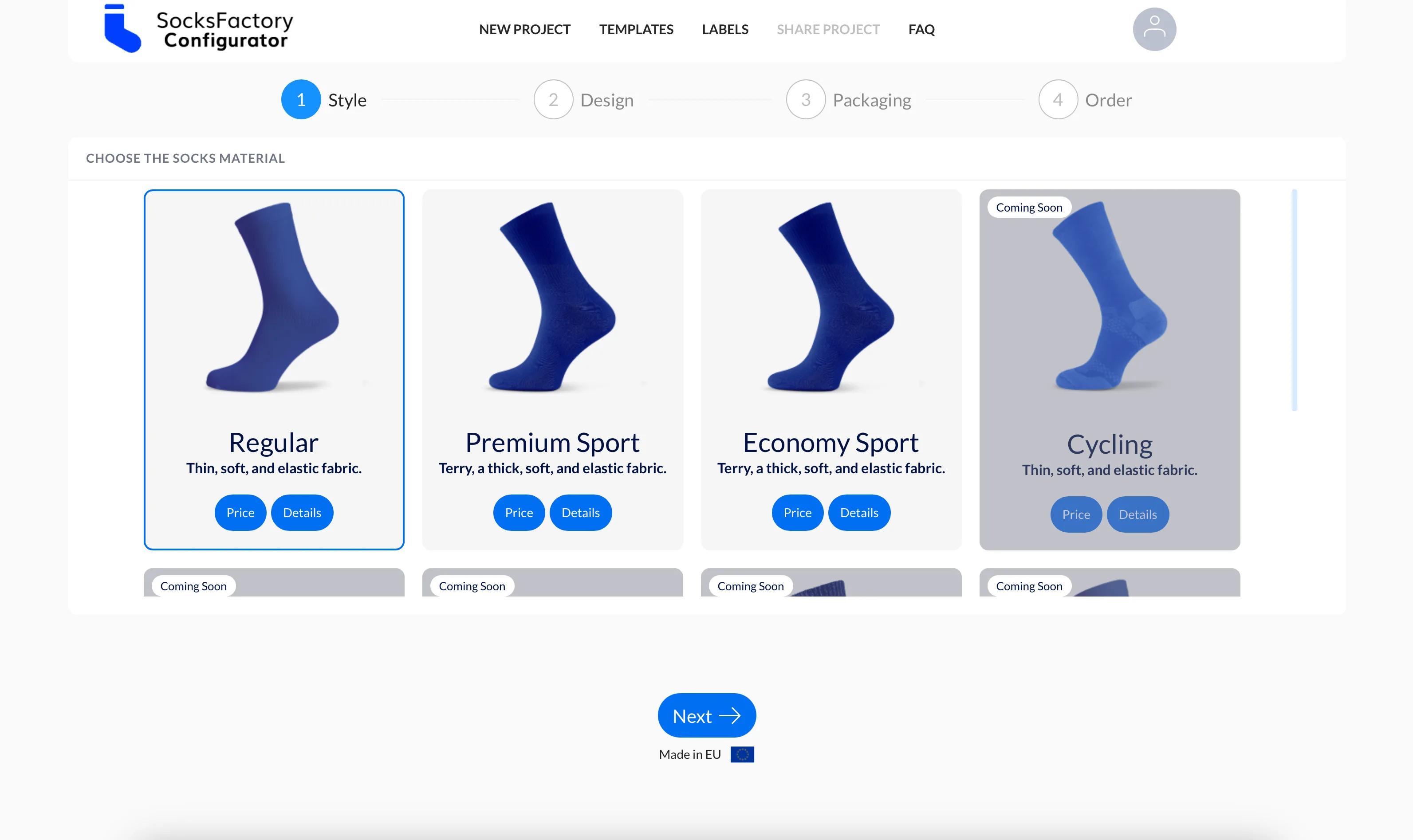
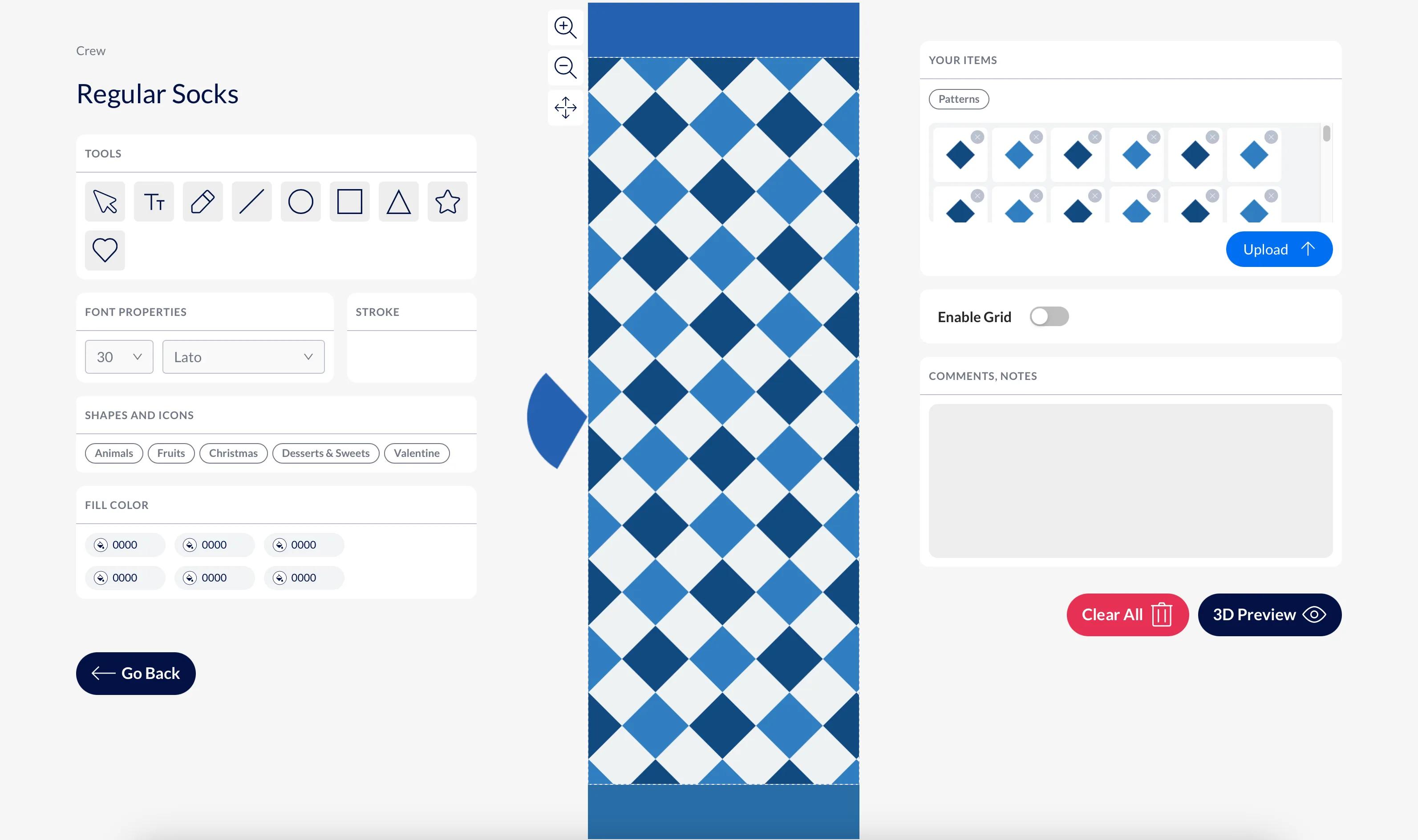
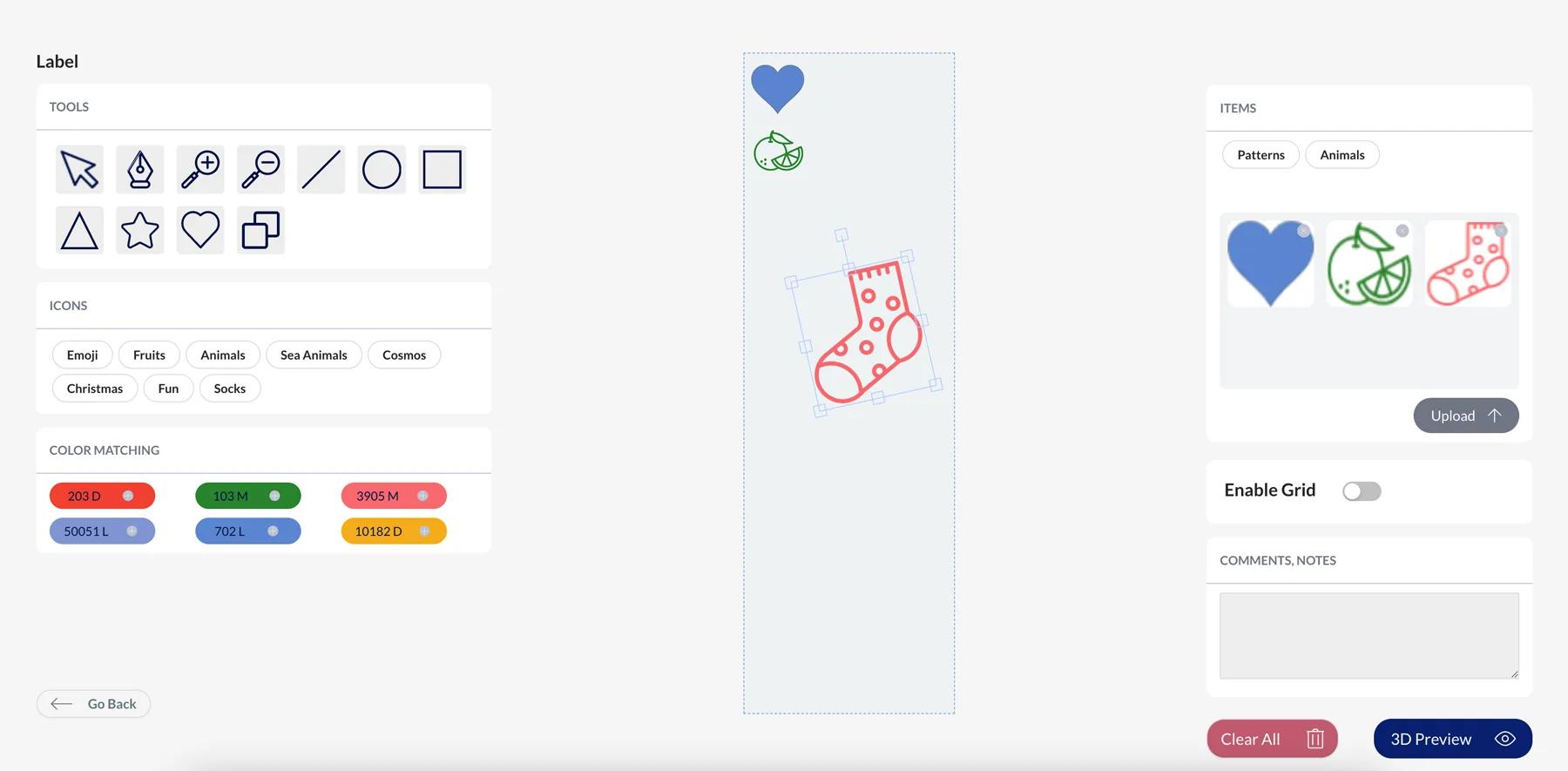
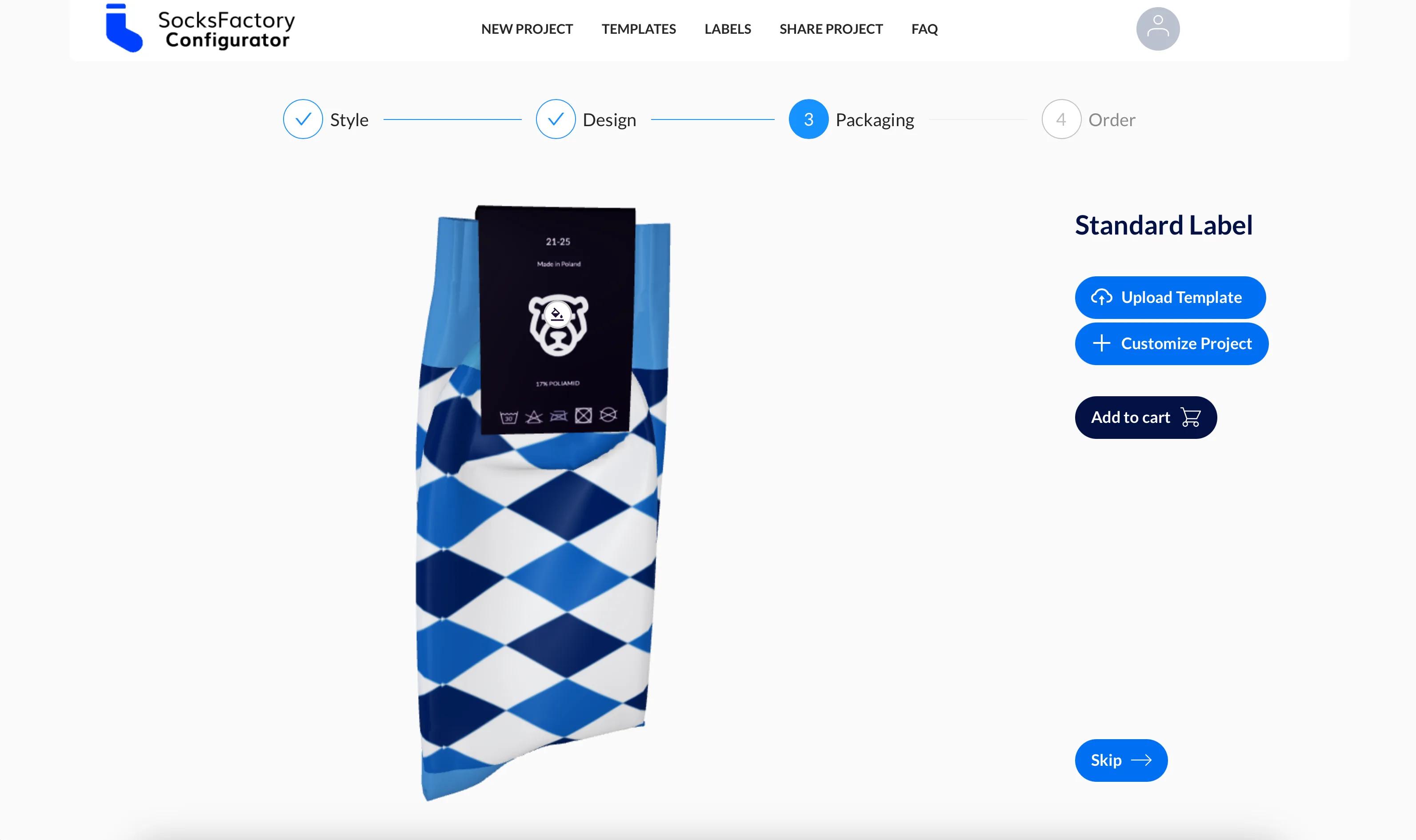
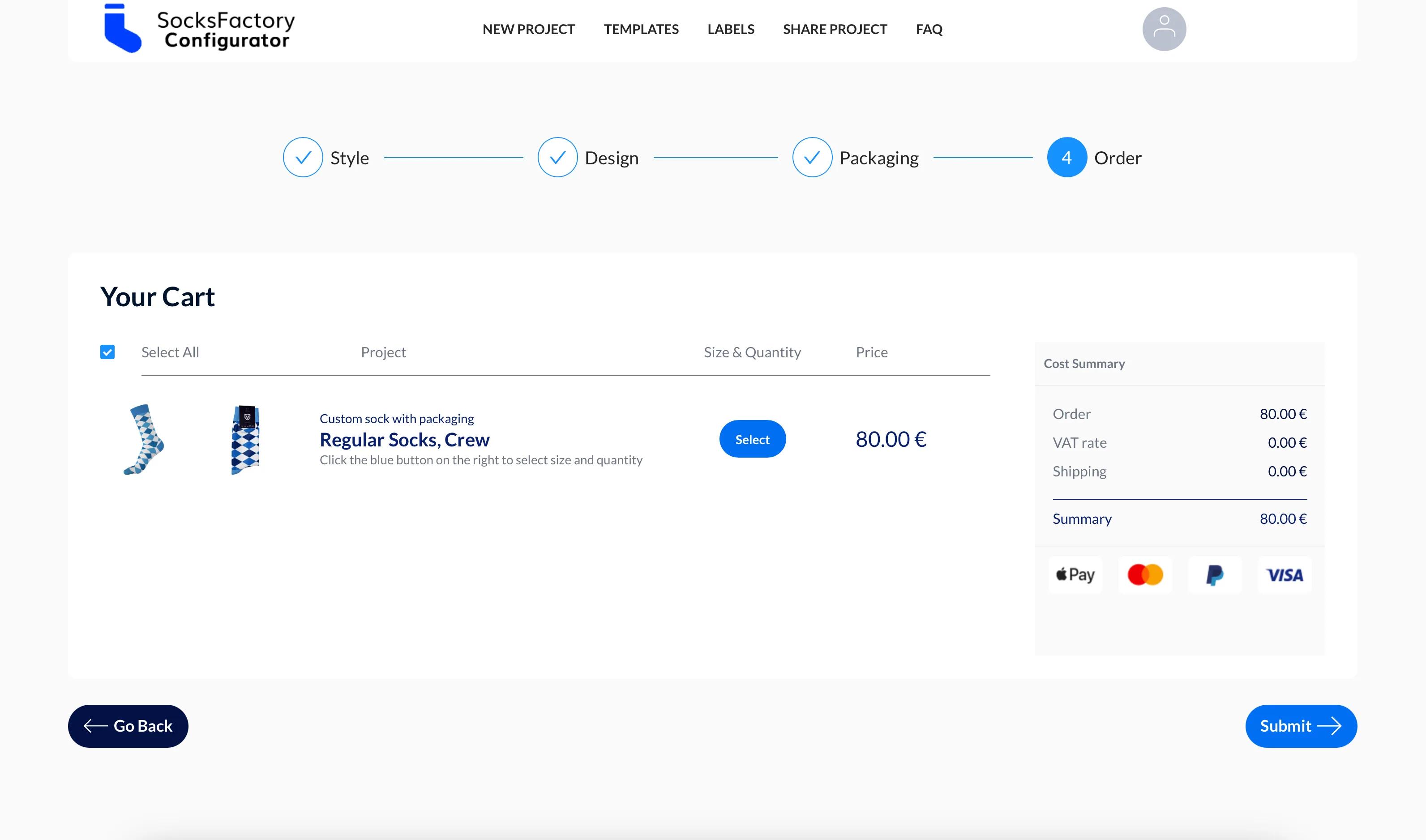
Customers can design their own sock with a few clicks, directly from the websites.
The sock configurator runs in English, German and Polish.
Stripe and PayPal integration allowed orders to be finalised without leaving the configurator.
The project continued with further features including a coupon system, chat integration, the user account module, bitmap studio and additional 3D models.
Easy to design your order, very good socks shape, very good mapping, project visual improvement and customer understanding.
Several things that were custom work in 2022 are now standard option blocks. Image Upload lets customers supply their own artwork, the Design Canvas positions, scales and rotates it on the product, the Pattern Designer applies repeating designs with scale, rotation and offset control, and Text Input adds custom text with font selection. SVG artwork containing distinct fill colours is detected automatically so each colour channel can be recoloured at runtime.
Beyond that, AI can now generate a starting configurator from a product description and audit an existing one, and the MCP server lets an AI assistant inspect projects and evaluate logic with a scoped token. None of these were part of the original build.
Zone colours, patterns, artwork upload and personalised text are standard blocks now.
Own a 3D product configurator to drive sales and generate proposals directly from your website
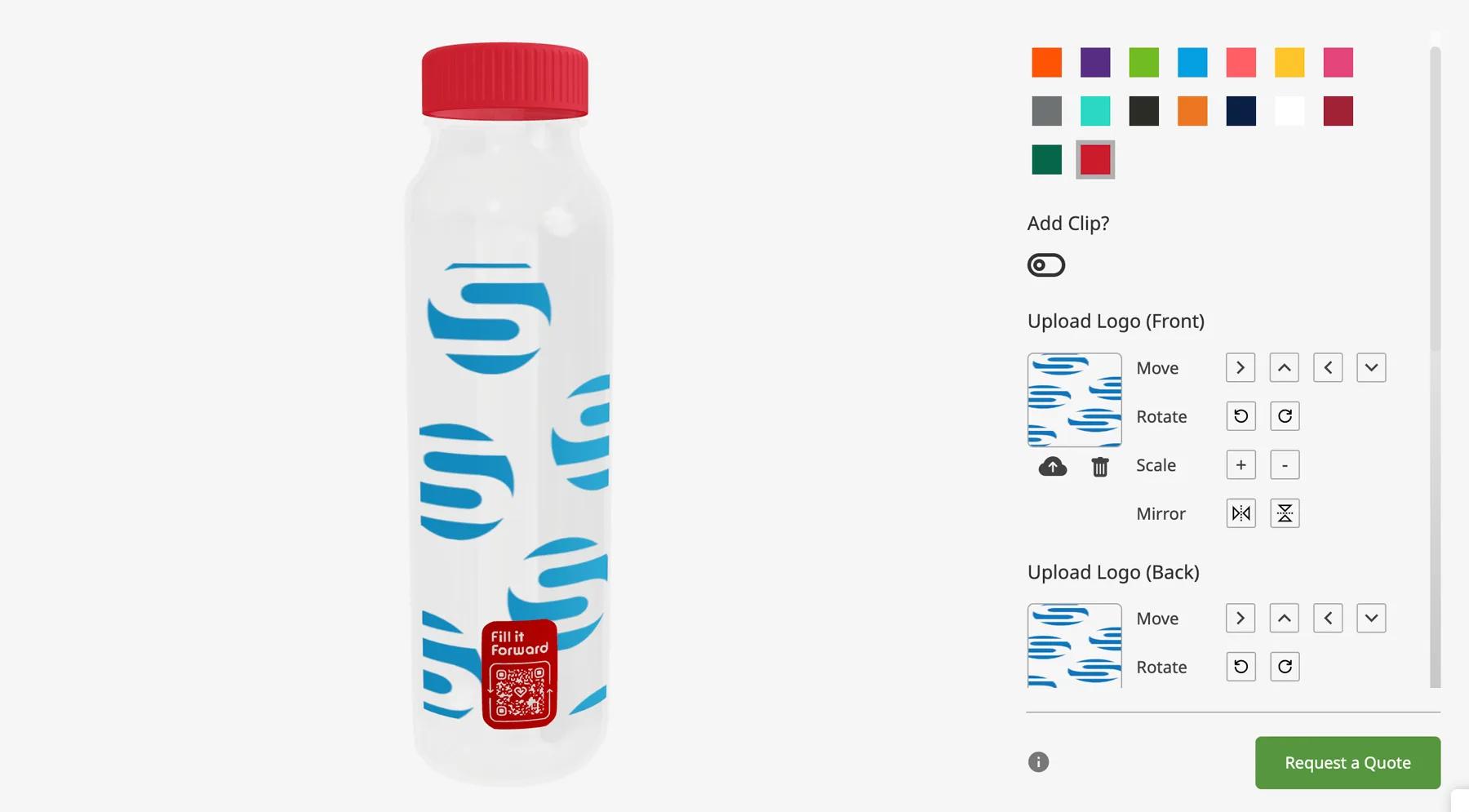
How Fill it Forward launched a 3D water bottle builder with logo upload and tiered pricing, integrated with their ERP through the Simplio3D open API.
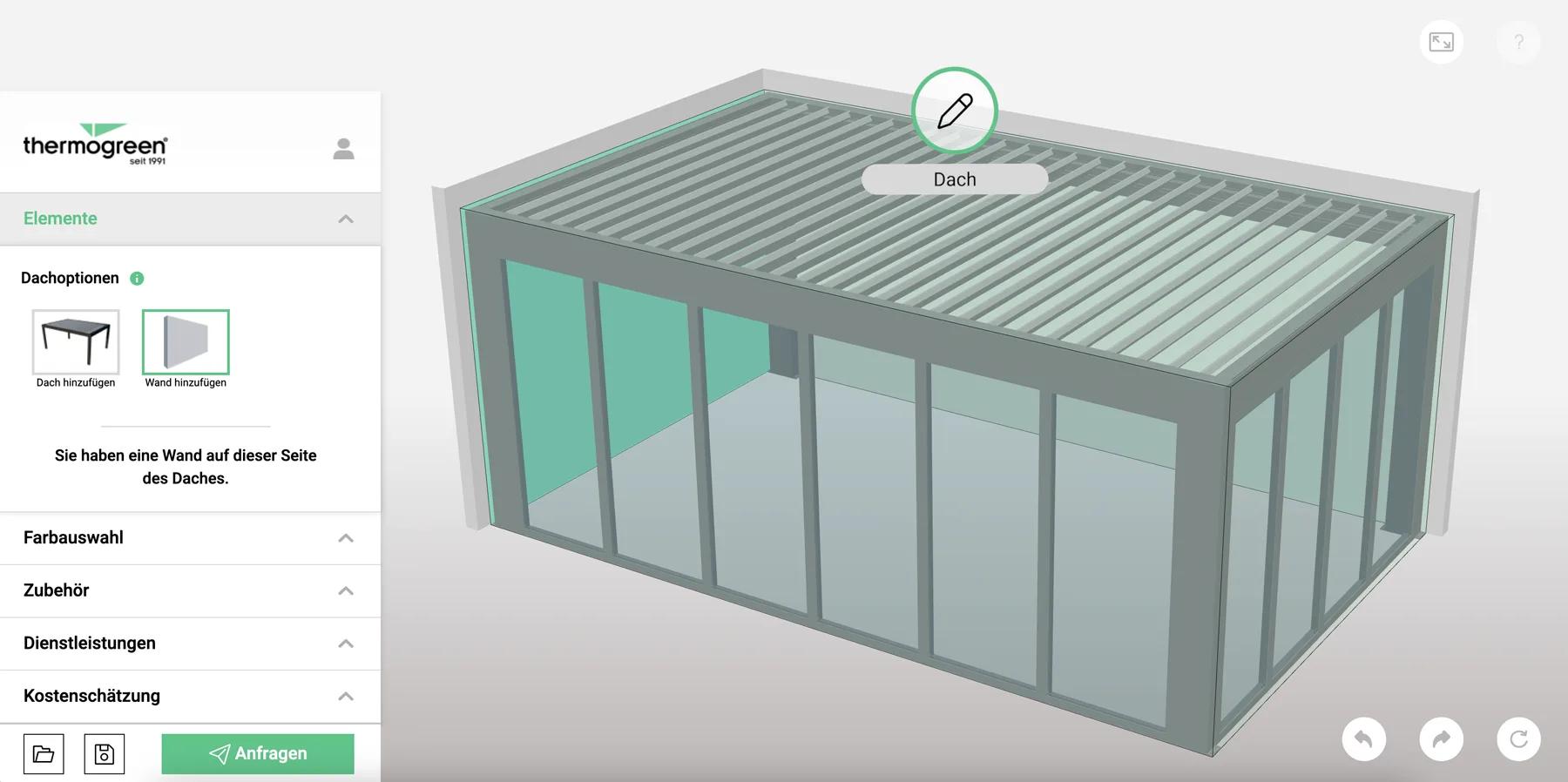
How Thermogreen AG built a glass roof terrace configurator with a custom UI and real-time pricing from their Mendix ERP, plus a sales quoting interface.
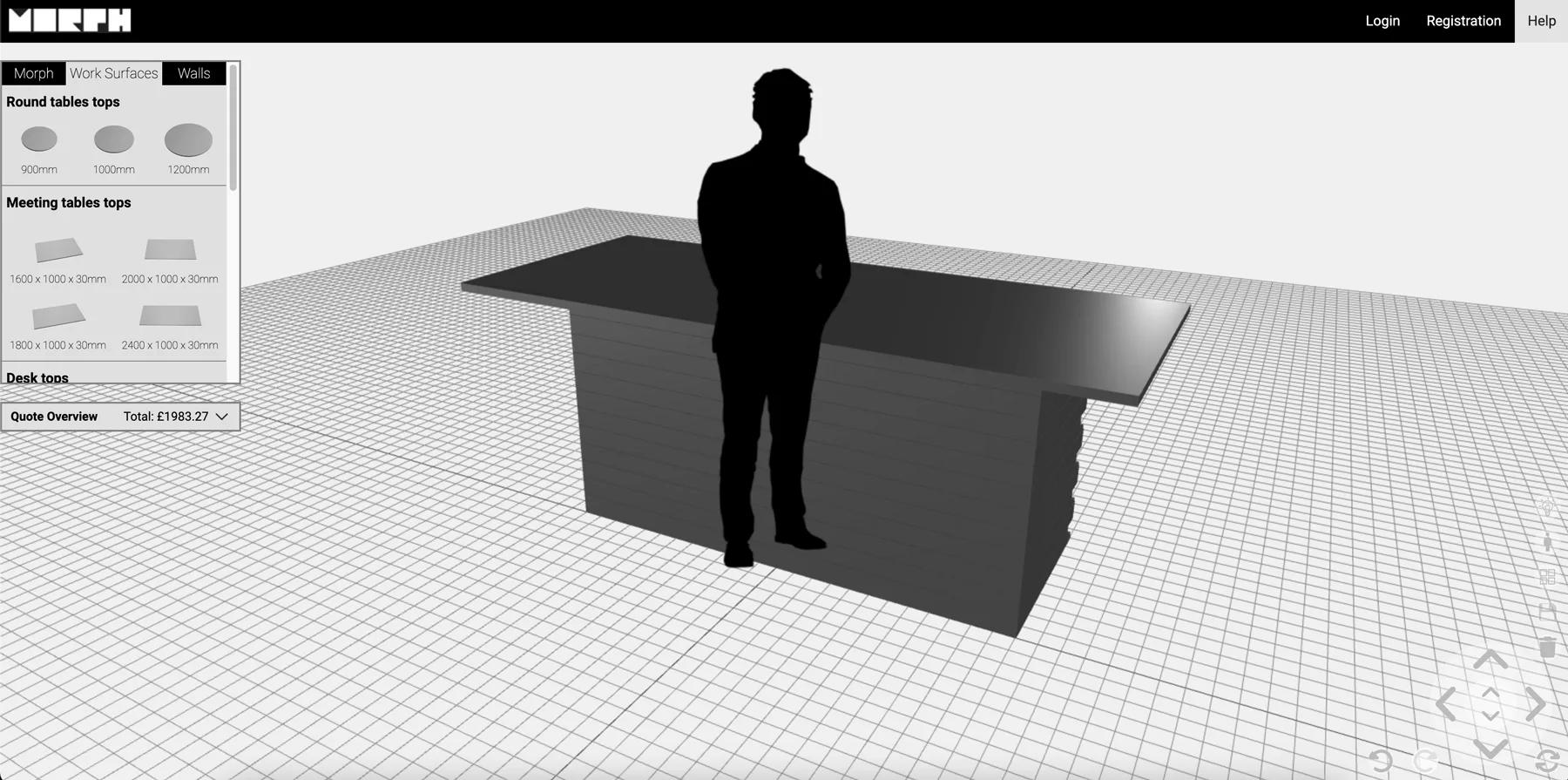
How Morph Bricks built a 3D configurator letting customers assemble walls, meeting rooms and seating from eight bricks, with a PDF build manual per project.